
8 Design Tips That Reduce FDM 3D Printing Costs
Whether you're ordering a one-off prototype or a small production run, the way a part is designed has a direct impact on its cost. At Bellair3D the primary item that factors into print costs is material usage, but other factors can contribute as well.
The good news is that a few smart design decisions can significantly reduce costs without sacrificing functionality. Here are 8 tips to help you design more economical parts for FDM 3D printing.
1. Minimize Support Material
Support structures consume additional filament, increase print time, and require post-processing after printing.
When possible, design parts to avoid steep overhangs by using chamfers, angled surfaces, or splitting complex models into multiple components.
2. Use the Right Wall Thickness
Walls that are excessively thick add unnecessary material and increase print time. Walls that are too thin may be too weak for the intended application. FDM printers typically print walls slower leading to increased print times too.
A consistent wall thickness that's appropriate for the part's purpose is usually the most efficient approach.
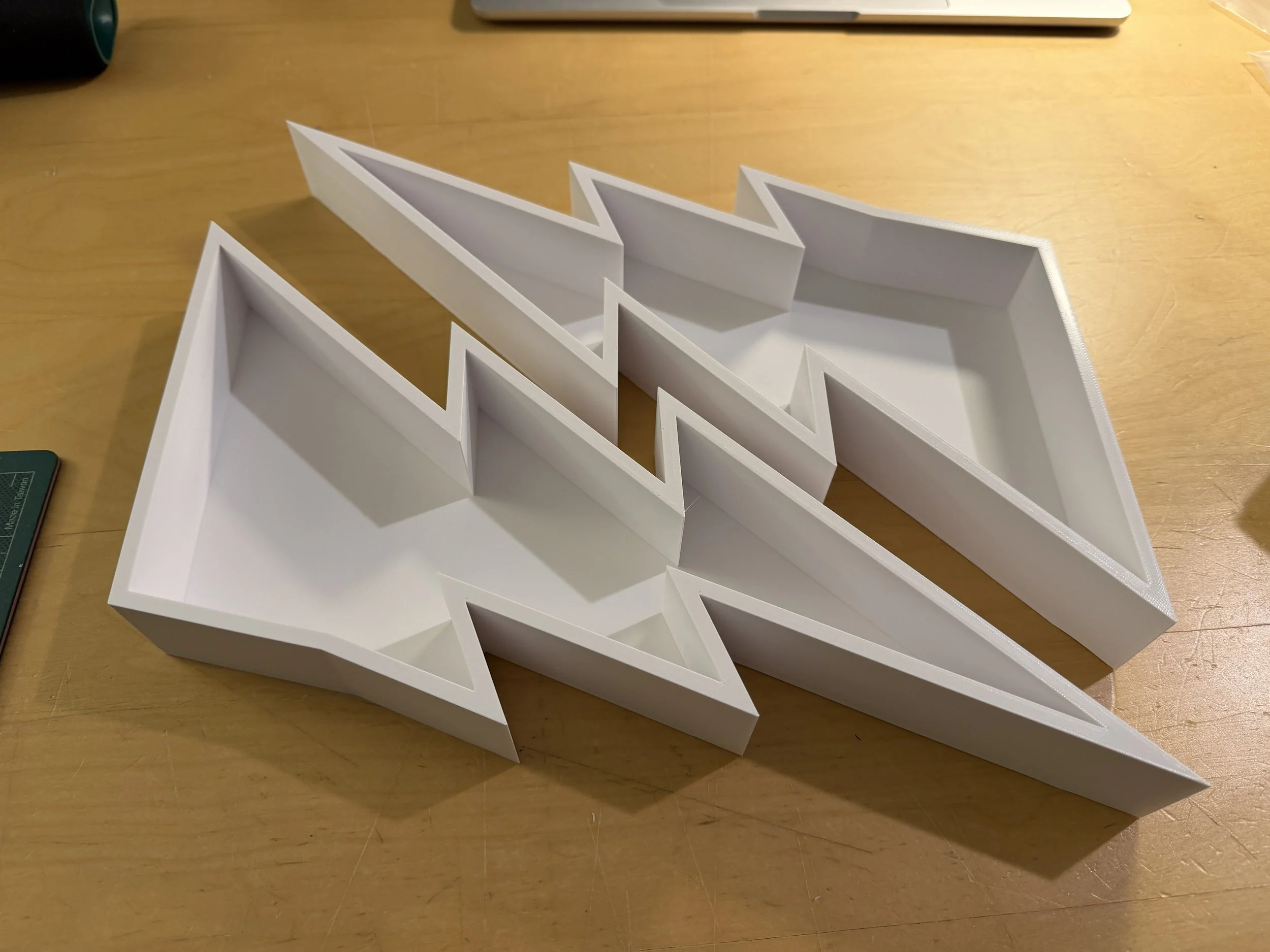
3. Hollow Large Parts
Solid parts consume much more filament than necessary.
For decorative or lightweight functional components, hollowing the model can dramatically reduce material usage. Alternatively we are happy to discuss minimizing infill in the part to have enough structure to print but reduce overall cost, especially if the part is not structural.
4. Design with Print Orientation in Mind
The orientation of a part affects print time, support requirements and support material usage, and strength.
A small design adjustment that allows the part to print flat can eliminate hours of printing and large amounts of support material. We are always happy to work with you on your part design to optimize how the part prints.
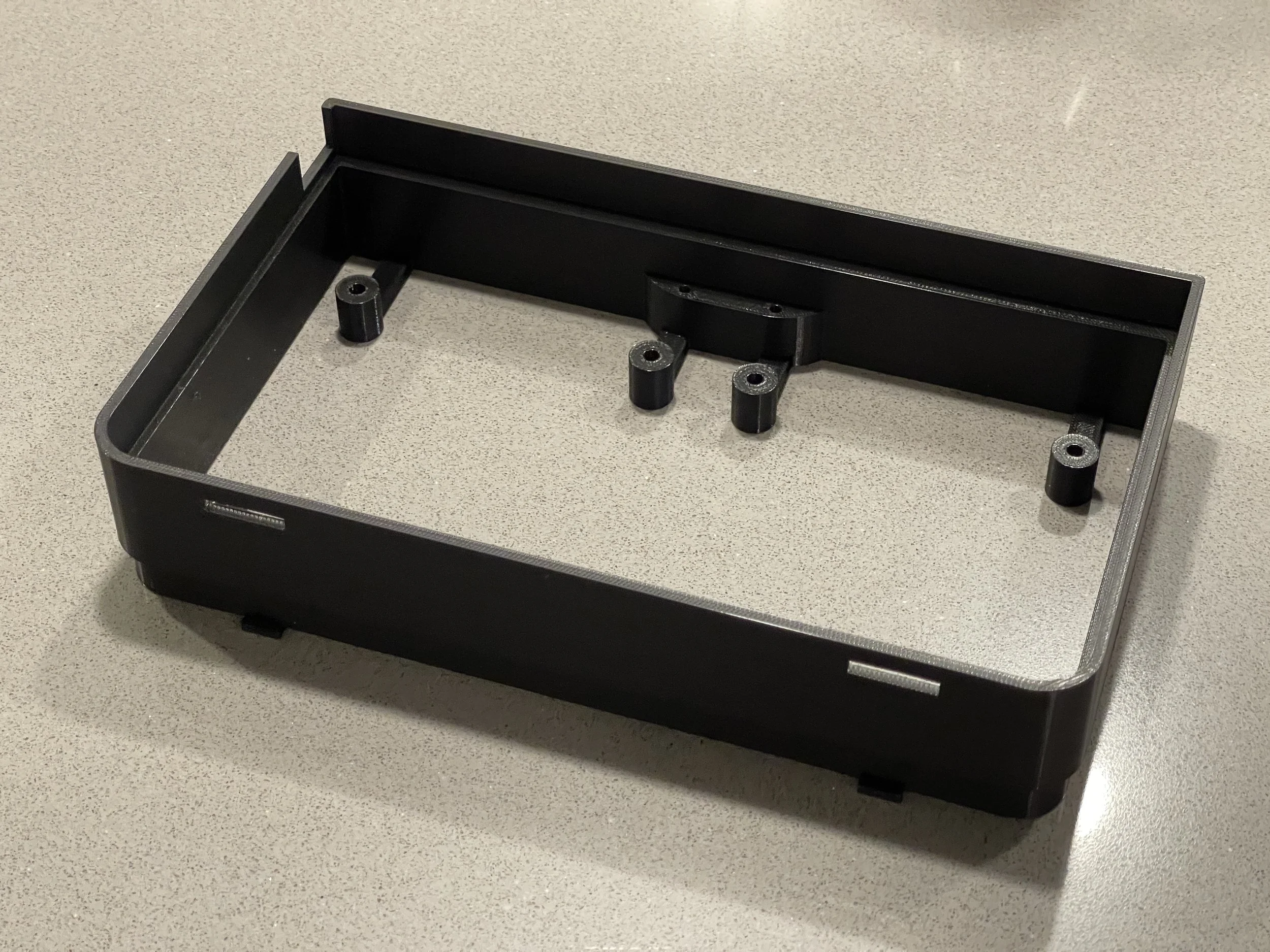
5. Split Complex Parts into Multiple Pieces
Large or awkward models sometimes require extensive supports, which requires more material usage.
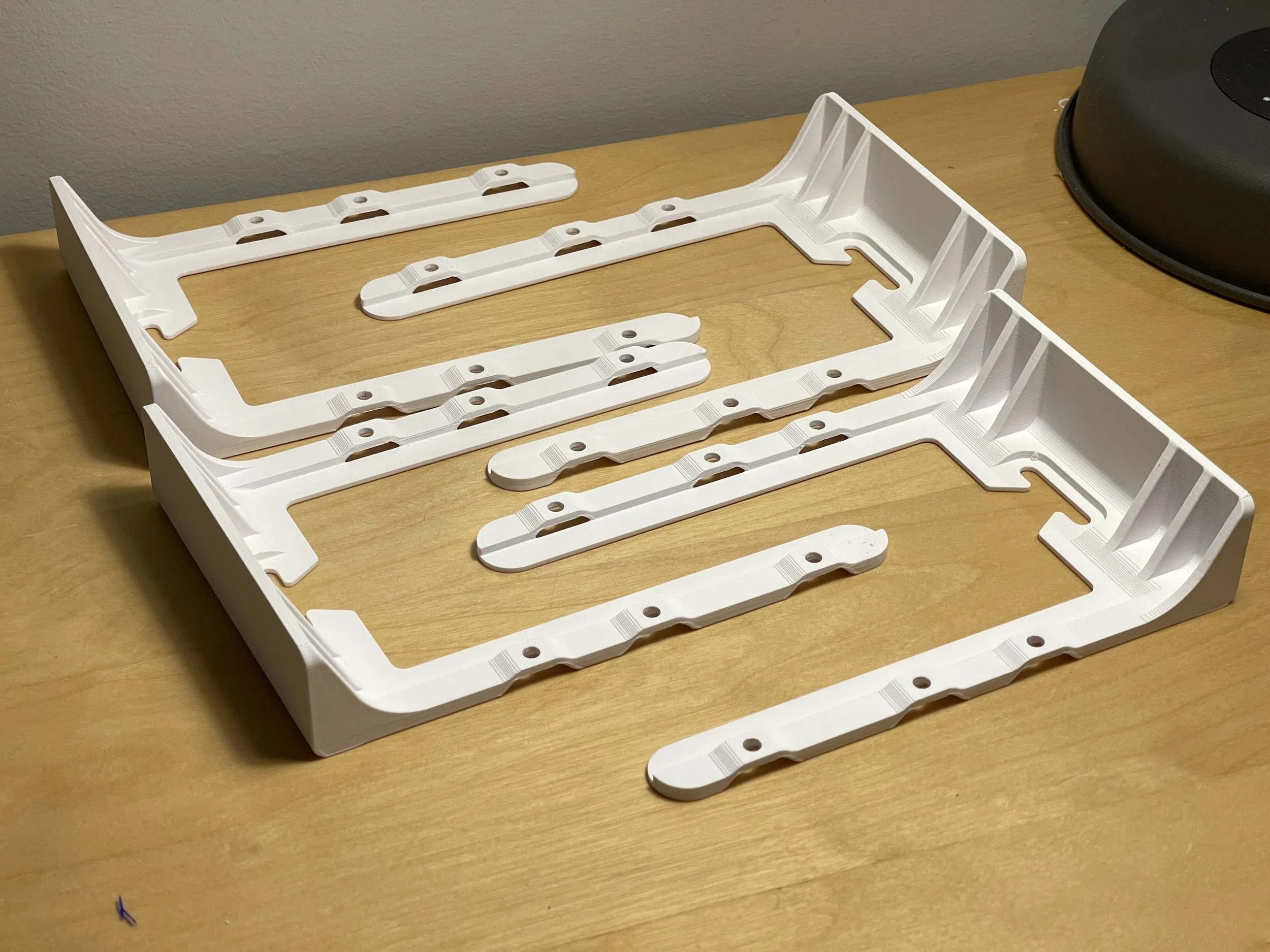
Breaking a model into smaller sections that can be printed in optimal orientations often reduces material usage and improves surface quality. Components can then be assembled using screws, adhesives, or snap-fit features.
6. Keep Overhangs Printer-Friendly
Many overhangs print successfully without supports if they're kept within practical angles. Typically 45 degrees or more.
Replacing horizontal features with gradual slopes or chamfers often eliminates the need for additional support structures.
7. Choose the Right Material
Not every project requires premium engineering materials.
For prototypes, concept models, and display pieces, PLA is often the most economical choice. Functional parts may benefit from PETG or other specialty materials depending on their intended environment.
Selecting the right material for the application helps avoid unnecessary costs while ensuring the part performs as expected. We are always happy to work with you on material selection to optimize for your specific application.
8. Design for Manufacturability
The most affordable parts are often the simplest to manufacture.
Before finalizing a design, ask questions such as:
Can this be printed without supports?
Are any features unnecessarily complex?
Can multiple parts be combined into one?
Is there excess material that doesn't contribute to strength?
Is the selected material appropriate for the application?
Small improvements made during the design phase can lead to substantial savings across every printed part.
Final Thoughts
Good design doesn't just improve how a part looks—it directly affects production costs. By minimizing support material, reducing unnecessary mass, optimizing orientation, and selecting appropriate materials, you can lower print costs while improving reliability and performance.
If you're unsure whether your design is optimized for FDM printing, the Bellair3D team can review your model and suggest cost-saving improvements before production begins. A quick design review often identifies opportunities to reduce print time and material usage while maintaining the functionality your project requires.